Decision Fatigue: Why Willpower Runs Out by Day's End
Decision fatigue explains why your worst choices happen at night. Learn why it occurs and practical routines to protect willpower for the decisions that matter.

Decision Fatigue: Why Your Willpower Runs Out by the End of the Day
The worst time to open a stack of mail, start a big conversation with your partner, or decide anything that matters is usually right after dinner. Here is what's actually happening, and how to stop scheduling your most important choices for the moment you're least equipped to make them.
You get home after a long day. You made dozens of small calls before you even sat down to dinner: what to reply to, what to eat, what to wear, which task to do first, whether to answer that call or let it go to voicemail, what tone to take with a colleague who annoyed you. None of these individually felt like a decision. Together, they were hundreds of them.
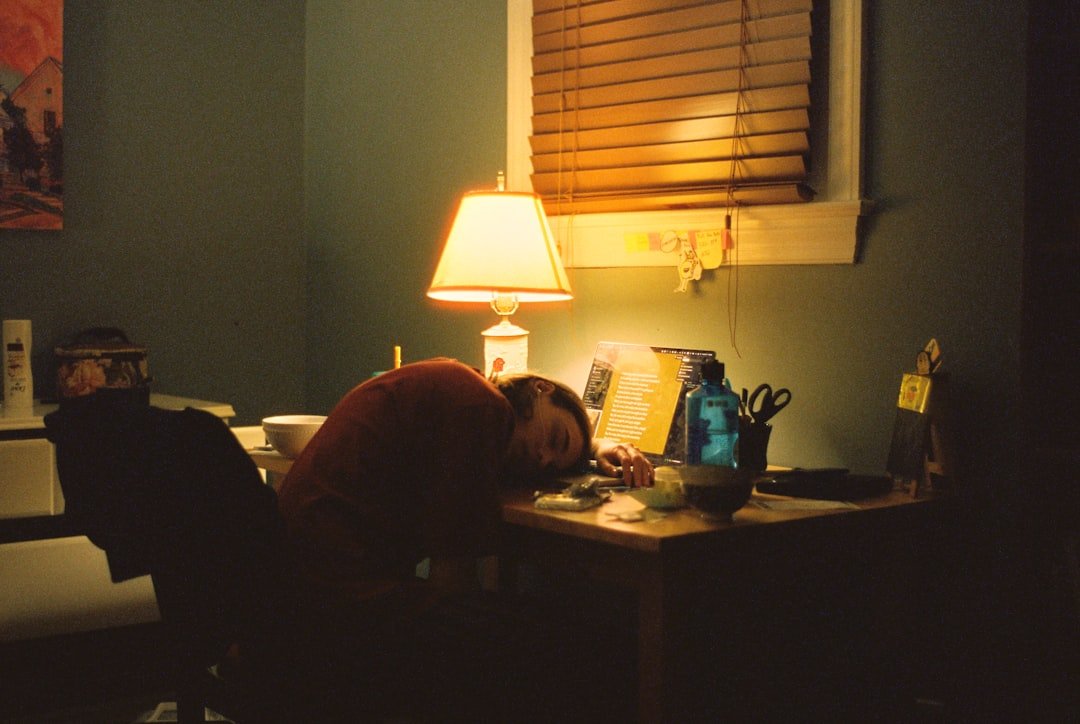
Then, at nine or ten at night, something with actual weight shows up. The stack of unopened mail with a bill you've been avoiding. Your partner wants to talk about whether to move, or have another kid, or how you're going to handle a shared financial problem. Or nothing external happens at all, you just pick up your phone to unwind and end up buying something you didn't need at 11:47pm. In every version, the important decision lands at the exact point in the day when you are worst equipped to make it well. That is not a coincidence, and it is not a character flaw. It is a predictable pattern called decision fatigue, and it is worth understanding on its own terms rather than through the vague idea of a willpower tank running dry.
Photo: Neil Owen / Wikimedia Commons (CC BY-SA 2.0)
What decision fatigue actually is
Decision fatigue describes a simple, observable pattern: the quality of your choices tends to degrade the more decisions you've already made, regardless of how big or small those earlier decisions were. It doesn't matter that choosing between two shirts and choosing a health plan are wildly different in stakes. Each one still requires you to weigh options, predict outcomes, and commit, and that process seems to draw on the same limited capacity no matter what you're deciding about. String enough of them together and the next one gets harder to do well, even if it's more important than the ones before it.
The popular version of this idea treats willpower like a fuel tank that empties over the day and refills overnight. That image is catchy, but it oversells the mechanism and makes the whole thing sound more mystical than it is. You don't need to believe in a hidden reservoir of mental energy to take decision fatigue seriously. You just need to notice the pattern: after a long stretch of choosing, people tend to do one of two things. They start picking the option that requires the least thought, which is often whatever is easiest, cheapest to consider, or already the default. Or they avoid the decision altogether and put it off, which is its own kind of decision, just an unexamined one.
Why you make your worst decisions at night
Here's the trap: the moments people most often choose for important decisions are the moments least suited to them. Mail gets opened after dinner because that's when there's finally a quiet minute. Big relationship conversations happen at night because that's the only time both people are home and free. Scrolling happens right before bed because the day's obligations are finally over and the phone is the last thing in reach. All three feel like sensible timing. They're actually the opposite.
By the time you open that mail, you've already made the calls that used up your capacity for careful evaluation, so the bill either gets a five-second glance and gets set aside again, or it gets an anxious overreaction that isn't proportionate to what's actually in the envelope. By the time you sit down with your partner to talk about something real, you're both running on the same depleted stock, which is a large part of why late-evening conversations about money, parenting, or the relationship itself tend to go sideways faster than the same conversation would on a Saturday morning. And by the time you're scrolling in bed, your resistance to a well-designed impulse-buy prompt is close to zero, not because the product is more appealing at night, but because evaluating whether you actually want it takes exactly the kind of deliberate weighing you have the least capacity left for.
It isn't a tank you empty, it's a pattern you can predict
The ego-depletion research that made "willpower as a limited resource" popular has been challenged a lot in recent years, and it's fair to be skeptical of any claim that pins the mechanism down precisely or attaches a specific number to it. What holds up without needing a controversial theory behind it is much plainer: humans are pattern-recognizing, energy-conserving organisms, and deliberate evaluation of options is metabolically and attentionally expensive compared to running on habit or default. After a long run of choices, the brain doesn't stop working, it shifts strategy, leaning harder on shortcuts, defaults, and "whatever's easiest" rather than genuinely weighing the options in front of it. You don't need a depleted tank to explain that. You just need to accept that careful thinking is effortful, and effort, spent repeatedly, gets harder to sustain.
The problem isn't that you ran out of willpower. It's that you scheduled the decision that mattered most for the exact time of day you had the least capacity left to make it well.
What fatigued decisions actually look like
It's worth being specific here, because "bad decisions" undersells what actually happens. Fatigued decision-making rarely looks reckless. It usually looks like one of two things. The first is defaulting: taking whatever option requires the least new thought, which is why the same argument with your partner keeps landing in the same unresolved place at 10pm, night after night, when a fresher version of both of you might actually work through it. The second is avoidance dressed up as a decision: closing the mail, telling yourself you'll deal with the big topic "this weekend," adding the item to a cart you'll "decide on later." Both feel like you did something. Neither is the deliberate weighing the moment actually called for. Recognizing this pattern in yourself isn't about guilt. It's diagnostic information: if you keep landing in the same unproductive place on a certain kind of decision, check what time of day you're making it before you conclude something is wrong with the decision itself.
Protecting the decision-making capacity you actually have
You can't add hours to the day or manufacture more capacity out of nothing. What you can do is stop spending it on things that don't need it, and stop scheduling the things that do need it for when you have the least of it left.
Turn small daily choices into standing routines
Anything you decide roughly the same way every time (what you eat for breakfast, what you wear to work, when you check email, your workout schedule) is a decision you can make once and never re-litigate. A routine isn't a lack of freedom, it's a decision you've already made, banked, and don't have to pay for again.
Move important decisions to the first half of the day
If a choice actually matters, protect a morning slot for it deliberately, before the day's smaller decisions have had a chance to add up. This applies to financial decisions, difficult conversations, hiring or firing calls, and anything you'd regret getting wrong because you were tired.
Cut the number of trivial decisions competing for the same resource
Unsubscribe from the emails that force a keep-or-delete call every day. Narrow your regular wardrobe. Set default answers for recurring requests. Every trivial decision you eliminate is capacity you don't spend before you get to the one that counts.
Reschedule high-stakes conversations out of the evening slot
If a conversation with a partner, family member, or business partner is genuinely important, don't default to "whenever we're both free at night." Book it for a weekend morning or a specific earlier time, the same way you'd book anything else that deserves your full attention.
Build a short buffer before any decision made late in the day
When an important choice can't be avoided at night (an urgent email, a late call), give yourself a fixed, short pause before responding rather than answering in the moment. A pause doesn't restore your full capacity, but it interrupts the default-to-easiest reflex long enough to catch it.
A useful test: if you notice you keep making the same choice badly at a particular time of day, the problem may not be the choice at all. Try moving it to the morning before you assume something deeper is wrong.
Common questions
What is decision fatigue and is it a real thing?
Decision fatigue is the tendency for the quality of your decisions to decline after you've already made a lot of other decisions earlier in the day, regardless of how important those earlier ones were. The specific lab research behind the original "willpower as a depletable resource" theory has been challenged and doesn't hold up as cleanly as once claimed, but the everyday pattern (defaulting, avoiding, and impulse-buying more after a long day of choosing) is well documented and easy to notice in your own life, which is why it's worth taking seriously as a practical pattern even without relying on a single contested theory.
Why do I make bad decisions at night?
By nighttime you've usually already made a long string of smaller decisions throughout the day, and that accumulated load tends to push you toward whatever requires the least new thought: the default option, the easiest answer, or postponing the decision entirely. It's rarely that nighttime itself is the problem. It's that the decision landed after your capacity for careful evaluation was already spent on everything else.
How can I reduce decision fatigue?
Three things help most: turning recurring small choices into fixed routines so you don't re-decide them daily, deliberately scheduling decisions that actually matter for earlier in the day, and cutting the sheer number of trivial decisions competing for your attention (fewer open loops, fewer notifications demanding a call, simpler defaults for recurring situations).
Is decision fatigue the same as ego depletion?
They're related but not identical. Ego depletion was the specific theory that willpower works like a literal tank that empties with use and refills with rest, and that theory has run into serious replication problems in recent research. Decision fatigue is the broader, more defensible observation that decision quality tends to decline with accumulated decision-making, which doesn't require you to accept the tank metaphor to be true.
What time of day is best for making important decisions?
For most people, earlier in the day, before a long string of smaller choices has accumulated, tends to produce more deliberate, less default-driven decisions. This is why it's worth protecting a specific morning window for anything that actually matters (financial choices, hard conversations, decisions you'd regret getting wrong) instead of leaving them for whenever the day happens to free up, which is usually the evening.
Stop deciding the same things twice
If you keep landing in the same stuck place on the decisions that matter most, the issue might not be the decision itself. It might be when and how you're making it. We can work through the pattern together and build a structure that protects your judgment for what actually counts.
Book a session
Decision Making
Why decisions are hard, where common thinking errors come from, and how to choose more clearly, even without all the information.
People who are stuck have rarely thought too little. More often there are too many options, a fear of regret, or the wait for permission that nobody will give. These articles show what happens in your head in such moments and which simple questions help you move from going round in circles to making a choice.
Much of this comes from coaching practice and from the decision space of the method, which describes exactly this kind of standstill.
Salah Abdeldayem
How to Make Better Decisions Under Pressure and Uncertainty: A Practical Guide to Sound Judgment
A good decision doesn't mean a perfect outcome every time. It means the best possible thinking process given the information available at the moment of deciding.

When the Economy Feels Like It's Against You: Career Decisions in Uncertain Times
How to tell the difference between genuine caution and quiet paralysis when every career decision seems to carry the whole economy on its back.
How to Make a Big Decision Without All the Information
Most consequential decisions never arrive with complete information, and waiting for certainty is itself a choice. A practical framework for deciding well anyway.
