Coaching in a Second Language: What Training Providers Gain When Participants Can Think in Their Own Language
Why everyday German is often not enough for a coaching conversation, and what training providers in Germany can do so that coaching works for participants who are new to the country.
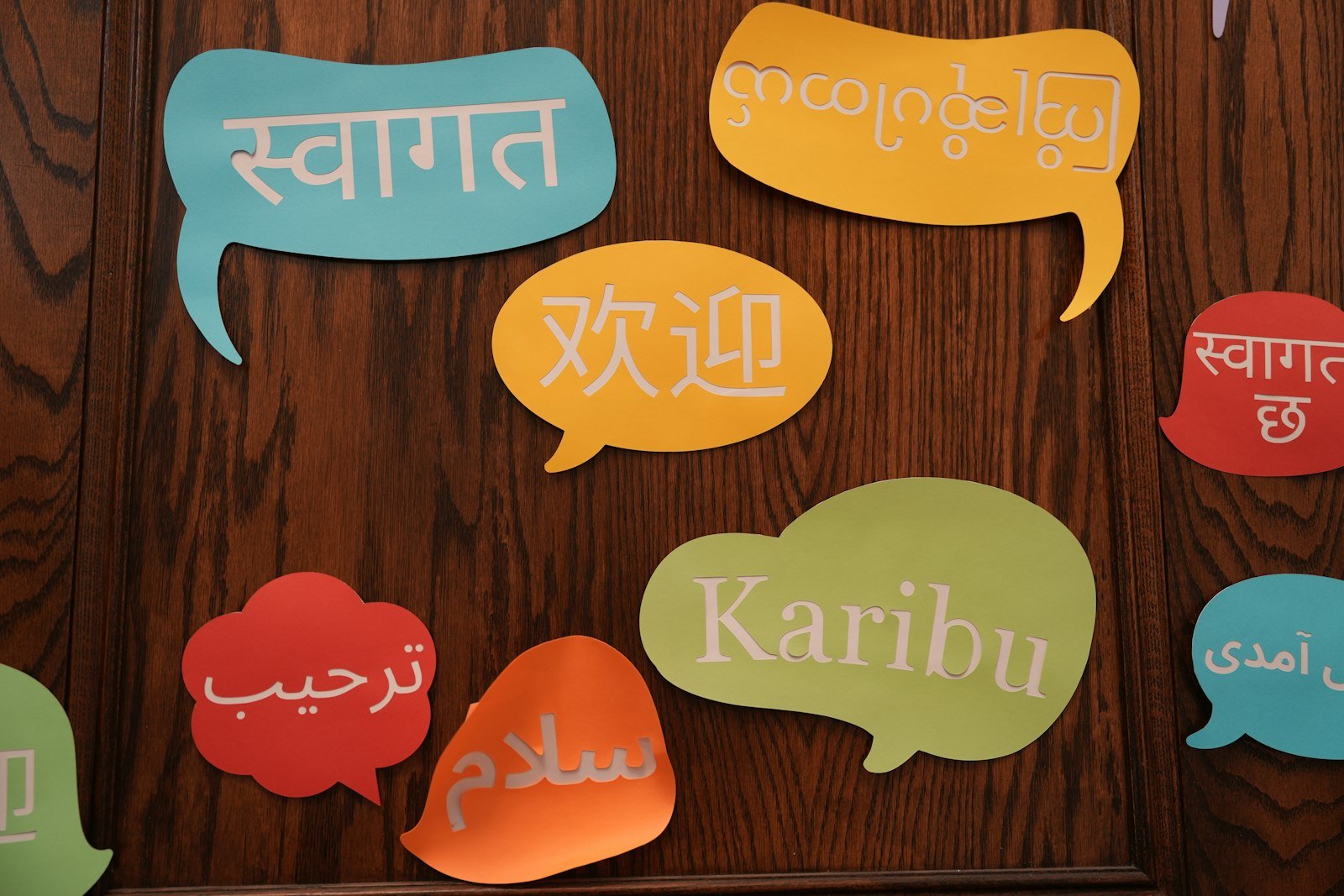
Many participants in employment programmes speak enough German for daily life, but not enough for a conversation about doubts, decisions and setbacks. What that means for one-to-one coaching and for planning a programme.
A participant sits in a one-to-one coaching session, nods, answers every question with "Yes, good" and goes home after 45 minutes with a plan he will not carry out. The coach thinks he lacks motivation. In fact he understood about half of the conversation and had no words for the other half. The example is made up. Anyone who works in programmes with participants who are new to Germany will still recognise it.
In short: Coaching depends on a person being able to say exactly what is holding them back. That rarely works in a language they are still learning. For training providers this means language is not a side issue. It helps decide whether coaching has any effect. Three things help: choosing the language of the coaching on purpose, working on the participant's inner language, and finding out where the real sticking point is.
Everyday German is not coaching German
Someone who can go shopping, book an appointment and take part in class has achieved a lot. A coaching conversation asks for something else. It deals with weighing options, with shame after a rejection, with the question of why someone has been putting off a phone call for three weeks. That takes nuance, and nuance is the last thing to arrive in a new language.
The result is easy to miss. Participants say what they are able to say, not what they mean. They agree because disagreeing costs too much effort in German. They seem quiet or passive, although in their first language they would talk about their situation clearly and in detail. On paper the coaching looks complete. Very little has changed.
The inner language is always running
There is a second layer, and it is where the Self Language Method starts: the sentences a person says to themselves. After a mistake, while learning, before a decision. People who are learning a new language and entering a new job market at the same time are often especially hard on themselves: "Nobody will hire me with my German." "I will call once I can say it without mistakes."
Sentences like these help decide whether an application gets sent. So the method works on three things: noticing what you repeat to yourself in difficult moments. Looking at mistakes in a way that keeps you learning. And speaking and trying things before you feel ready. The third point matters most for participants with German as a second language, because the pressure to be perfect leads straight to avoidance.
Someone who waits until their German is perfect does not apply. No application training changes that as long as the inner sentence stays the same.
First find out where it is stuck
Not every block is a language problem. In my work I use the Coaching Diagnosis System Map to trace being stuck back to one of four points: decision, action, effect or stability. Does the person not know what they want? Do they know but not get moving? Are they acting without results? Or is the ground missing in daily life that everything else would have to stand on?
This distinction saves time. A participant who cannot decide does not need a third application workshop. A participant who has sent twenty applications without a reply does not need a motivation session. She needs a close look at her documents and at how she presents herself. This kind of clarity is only possible when the conversation can go deep enough.
What you can do as a provider
At the start, ask about more than the language level. Ask in which language the person talks most confidently about personal matters.
For participants whose German is not yet enough for coaching, plan sessions fully or partly in their first language, as far as the concept of your programme allows.
Keep the goals apart: coaching is about clarity and next steps, the language course is about German. Forcing both into one hour usually costs both.
Practise the situations that will happen in German, such as a phone call or an interview, in German, once the content has been clarified in the first language.
Watch for agreement without follow-through. It often points to a comprehension problem, not to a lack of motivation.
One objection is obvious: does coaching in the first language slow down learning German? The concern is fair when a person's whole environment stays in one language. For coaching itself I see it differently. Someone who has understood in their own language what they want and what is holding them back walks into the German-speaking situations that matter with more confidence. This is my experience from practice, not a statistic. It is worth testing with individual cases in your own programme.
Who does what
None of this changes the division of roles. Approval of the programme, the contract with participants and billing with the job centre or employment agency stay with the provider. As a freelance coach I deliver the coaching according to the concept of the programme and document it as you require, in German, English or Arabic. Whether a person receives funding is decided by the job centre or the employment agency, not by the coach.
That depends on the concept of the programme, which is the provider's responsibility. If the concept provides for it, coaching can take place fully or partly in Arabic or English.
Is coaching in Arabic or English possible within an AVGS programme?
People who manage daily life in German but can talk about doubts, decisions and setbacks far more precisely in their first language.
Which participants benefit most?
No. Coaching clarifies goals and next steps. German is learned in class and in the situations that happen in German. Those situations can be prepared in coaching.
Does this replace the language course?
Book an intro call
In a free 20-minute call we clarify for which participants and in what form working together makes sense.
Language Psychology
How the words you think and speak with shape your feelings, your decisions, and the way you see yourself.
Whether you say “I have to” or “I want to”, “I am bad at this” or “I have not practised this yet” makes a difference that shows up in what you do. Then there is the question of living in more than one language: who are you in German, who in your mother tongue, and what gets lost between languages, for example between parents and children?
This topic is closely linked to the Self Language Method, which works on exactly this connection between language and self-image.
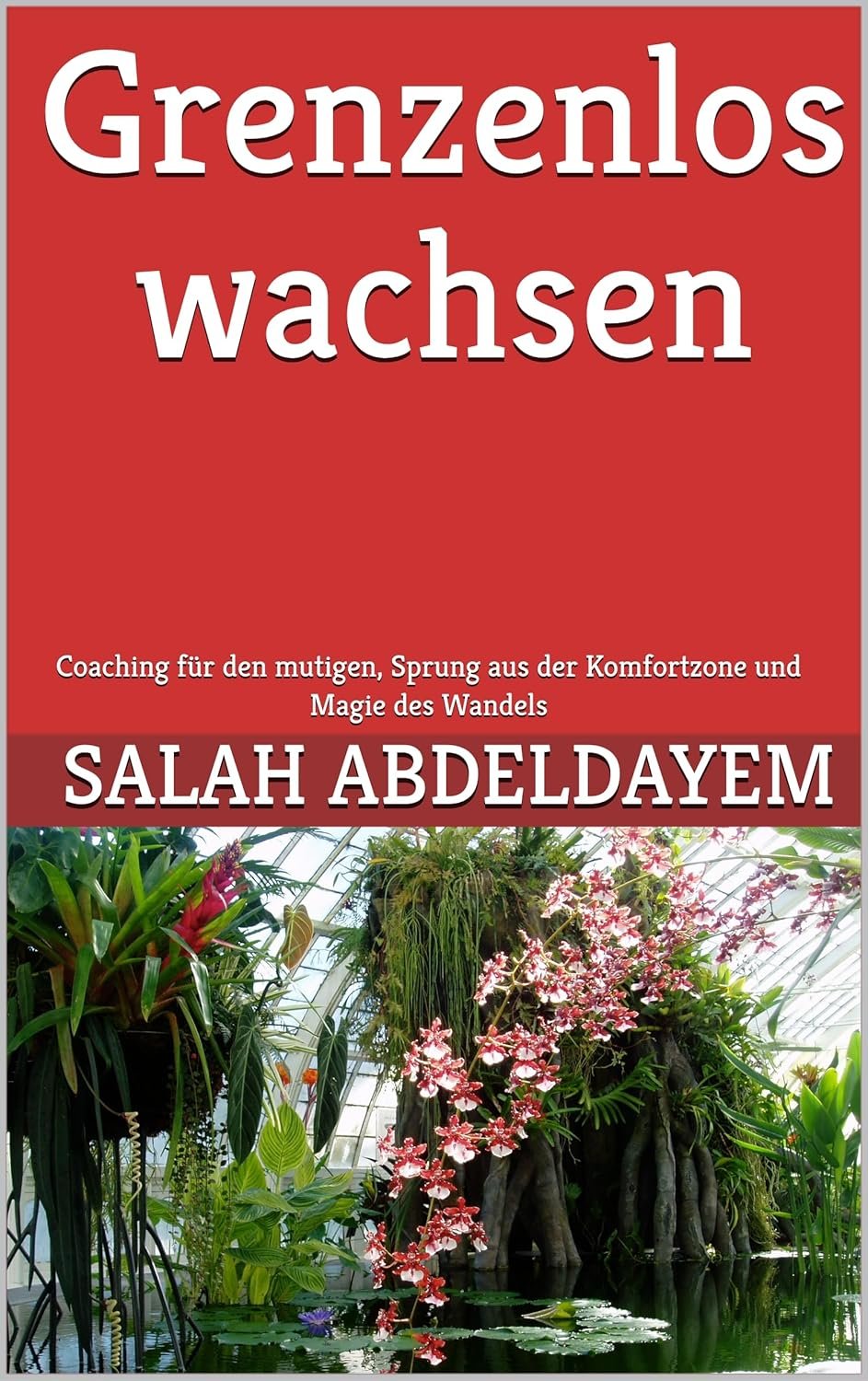
Growing Without Limits
Sprung aus der Komfortzone und Magie des Wandels
Coaching for the courageous leap out of the comfort zone, and the magic of change.
The comfort zone, taken seriously
Most growth literature treats the comfort zone as something to overcome by force of motivation. Growing Without Limits takes the opposite view: the comfort zone is a finely tuned safety system, and crossing it without understanding its function only produces a sharper rebound.
The book walks the reader through the steps of conscious, sustainable change, the kind that does not collapse after three weeks. It is grounded in coaching practice rather than self-help packaging, and it speaks to readers who have read enough of the genre to want something more honest.
Clarity about your own direction: Growth without direction is just movement. The book shows how an inner decision is separated from a bare idea, and why this separation is the first real step.
Courage as behavior, not feeling: In practice, courage is rarely felt before you act. It arises in the doing. Waiting for the right feeling keeps you seated; planning small steps moves you even under uncertainty.
The comfort zone as a moving boundary: The comfort zone is not a fixed room but an elastic skin. It stretches when new experience seeps in, and shrinks when it is protected. The book describes how that stretching can be steered.
Change as the magic of small repetitions: Big changes look magical because their building blocks stay invisible. They are the repeated, ordinary-looking steps that, in the end, assemble a different life.
Salah Abdeldayem
When Headlines Move Into Your Head: How Political Language Shapes the Way You Talk to Yourself
Flood, collapse, enemy, doom: political language is built for alarm, and its words migrate into your inner voice. How to notice them and speak more precisely about your own life.

The Immigrant Parent's Dilemma: Between Two Worlds, Two Languages
Your child is becoming fluent in a world you're still learning to read. Here's what that distance is actually about, and how real closeness gets built across it.