Waiting for Permission to Change Your Life? Here's What Actually Breaks the Pattern
Waiting for the right moment, the right feeling, or someone else's blessing before acting on what you want is rarely caution. Here's what actually breaks the pattern.

Waiting for Permission: Why You're Still Not Living the Life You Planned
The sign you're waiting for was never going to arrive, because it was never a fact, it was a feeling, and no external event was ever going to produce it.
The email has been sitting in the drafts folder for eleven months. You know it's eleven months because you can see the date it was started, and some nights, usually after everyone else in the house is asleep, you open it again, read it once, change a word, and close the laptop without sending it. It says something like: I've decided to leave and start the practice on my own. Or: I think we should separate. Or: I'm applying to the program, the one you've mentioned twice at dinner and then changed the subject. The specific sentence doesn't matter. What matters is the ritual (the returning, the rereading, the almost, the not-quite) repeated often enough that it has become its own strange kind of routine, as familiar by now as brushing your teeth.
You've told yourself a number of reasons for the delay, and most of them sound reasonable when you say them out loud. You're waiting until the finances are more stable. You're waiting until the kids are a little older. You're waiting for a sign, a clear one, that this is the right decision and not a mistake you'll regret. You're waiting, if you're honest in the particular way people are only honest with themselves at two in the morning, for someone else to tell you it's okay (a parent, a partner, a boss, a version of the universe itself) to hand you something that feels like permission, so that if it goes wrong, the going-wrong won't be entirely yours to carry alone.
Here is the part almost nobody says plainly: the sign is not coming. Not because you're unlucky, and not because the decision is wrong, but because the thing you're actually waiting for was never a fact that could arrive from outside you. It was always a feeling, and feelings of total certainty about an uncertain future do not exist for anyone, no matter how long they wait or how much evidence they gather first. I keep asking the world to tell me it's safe to want what I want, and the world was never going to answer.
What the Waiting Is Actually Protecting
Waiting for permission looks, from the outside and often from the inside too, like caution. Like the responsible thing. Like the mature choice of someone who doesn't act impulsively and wants to be sure before they leap. And sometimes, in fairness, a genuine pause before a big decision is exactly that, real caution, doing real work, gathering real information that changes the picture. But there's a version of waiting that isn't gathering information at all. It's gathering cover. It's the difference between preparing for a decision and postponing responsibility for one, and the two can look identical from a distance while doing something almost opposite underneath.
Here's the mechanism, and it's worth sitting with because it rarely gets said out loud: if you act on your own authority and it goes badly, the failure is fully yours. There's nowhere else to put it. But if you wait for permission (from a parent, a partner, a market condition, a feeling of readiness that never quite arrives) and it goes badly anyway, some part of the blame can be distributed elsewhere. You were waiting for the sign. The sign was late, or wrong, or never came. This isn't cowardice in any simple sense. It's a very old, very human strategy for managing the terror of being fully responsible for your own life, and it makes a certain amount of sense as a strategy, right up until the point where it quietly consumes years.
The trouble is that permission of this kind was never actually available to give. No parent, however loving, can guarantee your decision will turn out well. No partner's blessing removes the risk from a career change; it just adds a second person's hopes to the pile. No market condition, no amount of savings, no reassurance from a friend can manufacture the one thing you're actually asking for, which is certainty about a future that, by definition, hasn't happened yet and can't be known in advance. You are not short on information. You are waiting for a feeling that no fact was ever going to be able to produce.
You are not waiting for the right moment. You are waiting to feel a certainty that no external event has ever handed anyone, about anything that actually mattered to them.
The Man Who Kept Waiting for the Green Light
Picture someone in his mid-forties, call him the kind of steady, capable person other people go to for advice, which is part of what makes his own stuck-ness so invisible to everyone around him, himself included. He has wanted, for going on six years, to leave a stable and well-paid position at a firm he respects but no longer loves, and build something smaller and riskier of his own, in a field close enough to his training that it isn't reckless, far enough from it that it would genuinely be starting over.
Every year has had its own version of the reason it isn't yet the year. The mortgage was too new. Then the market was too uncertain. Then his oldest was starting a expensive stretch of school. Then, honestly, nothing external had changed at all, and he noticed (this was the part that eventually cracked something open) that he had quietly stopped even naming a reason. He had just kept waiting, the way a person keeps checking a phone for a message that stopped being likely to arrive months ago, out of habit more than expectation.
What actually moved him wasn't a financial windfall or a sudden burst of courage. It was a single, much smaller question, asked by someone he trusted enough to be blunt with him: what, specifically, are you waiting to feel, and has anything you've waited for so far actually produced that feeling once it arrived? He sat with it longer than he expected to. The honest answer was that nothing had. Every milestone he'd once told himself would make the decision feel safe (the mortgage settled, the market steadying, the kids older) had arrived on schedule and changed nothing about the fear underneath it. The fear wasn't attached to any of those conditions. It had just been borrowing their names.
He didn't quit that week. What he did was smaller and, in its way, more useful: he stopped waiting for the feeling of readiness to arrive before taking any action at all, and instead took one small, reversible step (a single client, taken on the side, on a Saturday) before he'd resolved a single one of his fears. The fear didn't go away. But it stopped being the thing deciding what he did next, and that distinction, once he could see it, turned out to matter more than any amount of additional certainty ever would have.
Permission and Readiness Are Not the Same Thing
This is a distinction worth being precise about, because the two get treated as interchangeable and they aren't. Permission is something you receive from outside yourself, a yes from someone else, a green light from circumstances, an external event that grants you the right to want what you already want. Readiness is something else entirely: a set of concrete, buildable conditions (a skill, a saved amount, a first small test of the idea, a conversation you've actually had instead of only imagined) that you can work toward on purpose, regardless of whether anyone else ever signs off on it.
The reason this distinction matters practically is that permission-seeking is a closed loop with no exit, because the permission you're actually looking for doesn't exist in a form anyone can grant. You can wait for it literally forever, and plenty of people do, quietly, for decades, telling themselves each year that next year is when the sign will finally come. Readiness-building, by contrast, is a loop with an exit built in, because every piece of it is something you can actually go do this week, and each piece you complete changes the picture in a way that waiting never does.
Most people who feel stuck aren't actually short on capability. They're confusing the two loops, spending their energy on the one that can never resolve while neglecting the one that quietly, steadily could. Confidence, in particular, tends to get treated as a precondition for action (I'll do it once I feel confident) when in most well-documented cases it works the other way around: confidence is usually a result of small, completed actions, not a feeling that arrives beforehand to authorize them. Waiting to feel ready before you act is, for most people and most decisions, waiting for a cause to arrive that is actually an effect.
Name, specifically, what you believe you're waiting to feel (safe, certain, approved of, ready) rather than leaving it vague.
Ask honestly whether anything you've already waited for has produced that feeling once it arrived, or whether the feeling kept relocating to the next milestone.
Identify one small, reversible action related to the decision that doesn't require anyone's permission and doesn't require the fear to be gone first.
Take that one action this week, on a small enough scale that being wrong about it would be survivable, not catastrophic.
Notice what actually changes afterward, usually not the fear disappearing, but your relationship to acting alongside it.
Most stalled goals aren't stalled for lack of ability
I built the Confidence Calibrated Goal Setter, one of Mentonovo's free tools, on an observation from my own work: most goals fail because they're set in the wrong confidence zone, too safe to matter, or too far out to sustain. It gives you a concrete way to calibrate a goal to where real movement actually happens, instead of waiting for a feeling of total readiness that was never going to arrive on its own.
Calibrate your goals
When the Permission You're Waiting For Belongs to Someone Else
There's a version of this pattern that's harder to name because it doesn't feel like waiting at all, it feels like love, or loyalty, or basic consideration. This is the version where the permission you're withholding action for isn't abstract and external, but comes from a specific person: a parent whose disappointment you can already picture with uncomfortable precision, a partner whose full enthusiasm you're waiting to feel before you'll let yourself want something they haven't yet said yes to, a spouse or a sibling or a close friend whose blessing has quietly become the actual condition for your own permission to move.
This is genuinely more complicated than the abstract version, because relationships are real, and a decision that affects a shared life or a shared household deserves real conversation, real compromise, and real weight given to the people it touches. Wanting to consider your partner's feelings about a major decision isn't the pattern being described here. The pattern is subtler: it's continuing to wait for a stated approval that either isn't coming, or would take a conversation you haven't actually had yet, and mistaking the absence of that conversation for the absence of permission, when what's actually missing is simply the conversation itself.
It's worth separating, honestly, two very different situations that get treated as one: a partner who has clearly and specifically said no to a shared decision, which is a real constraint deserving real respect, and a partner who simply hasn't been asked directly, because asking directly would require you to say out loud what you actually want, and some part of you would rather stay in the safer, vaguer place of assuming disapproval than risk hearing an answer, in either direction, that would make the waiting stop being an option. Many people discover, once they finally have the actual conversation instead of the imagined one, that the disapproval they'd been protecting everyone from was mostly their own.
And even where a genuine disagreement exists, there's a difference between needing someone's full enthusiasm before you'll let yourself want something, and needing their basic respect for your right to want it while you work out, together, how it might actually happen. The first standard is nearly impossible to meet in any real relationship, because few people are instantly, wholeheartedly thrilled about a change that also changes their own life. The second standard is achievable, and it's usually the one that was actually available all along, hiding behind the much harder one you'd quietly set instead.
What story are you actually telling yourself about this decision?
I built the Narrative Decision Reframe Tool, one of Mentonovo's free tools, to help you reframe a decision by changing the story you tell about it, often the fastest way to notice that the permission you've been waiting for was a story you were telling yourself, not a fact about the people or circumstances around you.
Reframe the decision
What Actually Breaks the Pattern
If waiting for permission were mostly about missing information, more information would fix it. It rarely does, which is itself useful evidence about what's really going on. What tends to break the pattern isn't a bigger sign, a clearer answer, or more time spent thinking it through in private. It's almost always a small, real action, taken before the fear has resolved, that produces actual evidence, evidence you generated yourself, rather than evidence you were hoping someone else would hand you.
This works because the nervous system doesn't fully trust hypothetical information. You can imagine the new career going well a hundred times and it will move you less than one real Saturday spent actually doing a piece of it. You can rehearse the conversation with your partner in the shower every morning for a year and it will teach you less than the ten real minutes of actually having it. Imagined evidence, however detailed, stays imagined. Lived evidence, even a small amount of it, changes the baseline you're operating from in a way that no amount of rehearsal ever quite manages.
This is also why the size of the first step matters more than people expect. A first step that's too large (quitting outright, announcing the decision to everyone at once, betting everything on the first attempt) tends to trigger exactly the fear that's been running the waiting pattern all along, which makes it more likely you'll retreat and reinforce the belief that waiting was the safer choice after all. A first step small enough to survive being wrong about does something different: it gives the part of you that's been demanding certainty a small, real, low-stakes data point to work with, instead of asking it to leap from zero evidence straight to total conviction.
Pick the smallest version of the decision you could act on this week without needing anyone's approval and without needing the fear to be resolved first, one client, one honest conversation, one application, one hour spent actually building the thing instead of planning it. The goal isn't to solve the whole decision. It's to replace one piece of imagined evidence with one piece of real evidence, and let that do more work than another month of waiting ever could.
Common Questions
How do I know if I'm being genuinely cautious, or just stuck waiting for permission?
Genuine caution is actively gathering specific, useful information that changes your decision, a number, a conversation, a test. Waiting for permission tends to feel more like circling the same ground without new information arriving, month after month, while the reasons for the delay quietly shift from one to the next without ever running out. If you can name exactly what new fact you're waiting to learn, and a realistic date by which you'd learn it, that's usually caution. If the honest answer is a feeling rather than a fact, that's usually the waiting pattern.
What if the people I love genuinely don't approve of what I want to do?
That's real, and it deserves honest weight rather than dismissal. But it's worth separating their disapproval, which you can't control, from your own right to want something in the first place, which doesn't require their agreement to exist. Many people find that once they've had the actual conversation, the disapproval was smaller, more negotiable, or more rooted in fear for them than they'd assumed, and even where it isn't, wanting something is not the same act as demanding someone else be thrilled about it.
Isn't it more responsible to wait until I'm sure before making a big change?
It's worth asking what specifically you're waiting to be sure about. If it's a concrete fact you can actually go find out, waiting to learn it is responsible. If it's a feeling of total certainty about how an uncertain future will turn out, that feeling isn't available to anyone, for any decision, no matter how long they wait, and treating it as the bar for action usually means the action never comes.
What's a realistic first step if I've been stuck for years and everything feels too big to start?
Look for the smallest version of the decision that's fully reversible and doesn't require anyone else's sign-off, a single conversation, a small paid test of the idea, one afternoon spent actually building rather than planning. The goal of a first step this small isn't progress toward the full decision. It's proof, generated by you, that you can act while the fear is still present, which tends to matter more than any amount of additional certainty gathered from the sidelines.
The permission you've been waiting for was never going to arrive in a form anyone could hand you, because it was never actually about a mortgage settling, or a market steadying, or someone else's timing finally lining up with yours. It was about wanting, on your own authority, without a guarantee attached, which is the only way wanting has ever actually worked, for anyone, about anything that mattered.
You don't have to feel ready. Almost nobody does, at the actual moment they finally move, and the ones who tell you otherwise are usually remembering it more cleanly than they lived it. What you have is a decision you've already made, in every way except the one that counts, and a small, real, survivable step available to you this week that doesn't need anyone's blessing to take. That's not recklessness. It's just what it actually looks like to stop waiting for a green light that was never going to switch on by itself.
Decision Making
Why decisions are hard, where common thinking errors come from, and how to choose more clearly, even without all the information.
People who are stuck have rarely thought too little. More often there are too many options, a fear of regret, or the wait for permission that nobody will give. These articles show what happens in your head in such moments and which simple questions help you move from going round in circles to making a choice.
Much of this comes from coaching practice and from the decision space of the method, which describes exactly this kind of standstill.
Salah Abdeldayem
How to Make Better Decisions Under Pressure and Uncertainty: A Practical Guide to Sound Judgment
A good decision doesn't mean a perfect outcome every time. It means the best possible thinking process given the information available at the moment of deciding.

When the Economy Feels Like It's Against You: Career Decisions in Uncertain Times
How to tell the difference between genuine caution and quiet paralysis when every career decision seems to carry the whole economy on its back.
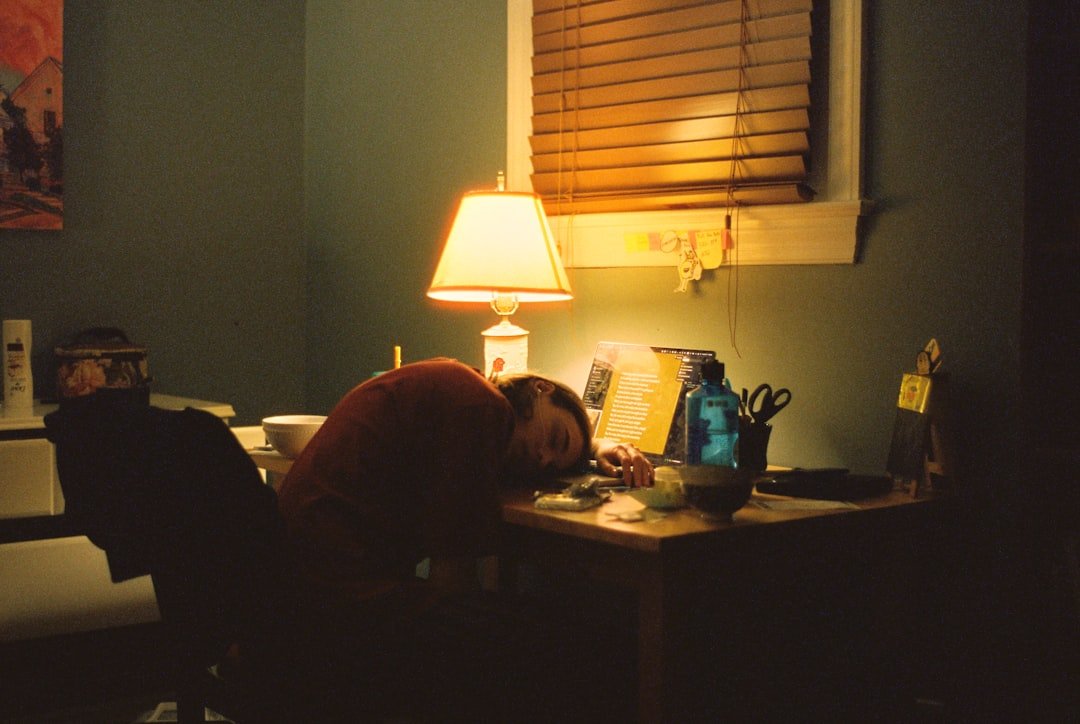
Decision Fatigue: Why Your Willpower Runs Out by the End of the Day
The worst time to open a stack of mail, start a big conversation with your partner, or decide anything that matters is usually right after dinner. Here is what's actually happening, and how to stop scheduling your most important choices for the moment you're least equipped to make them.
