



The Architecture of Change: Decoding the Mechanics of Neurocoaching
Neurocoaching is not merely coaching with a few "brain facts" sprinkled on top; it is the intentional, repetitive activation of specific neurological pathways to create measurable, structural changes in the brain-mind-body continuum.
COACHING & TRAINING METHODS
Salah Abdeldayem
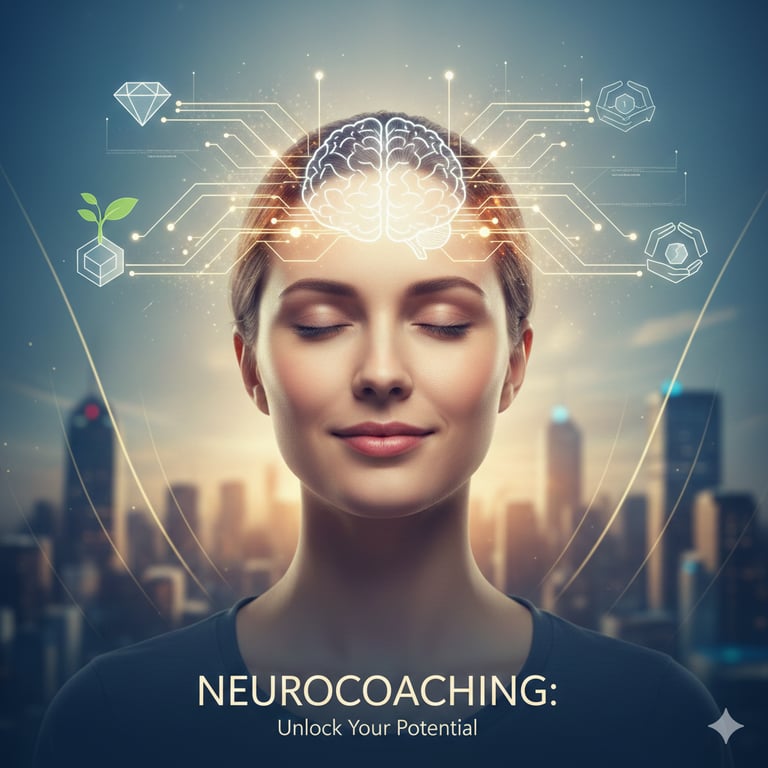

The Architecture of Change: Decoding the Mechanics of Neurocoaching
In the traditional coaching landscape, the primary lever for change has long been the "mindset"—a nebulous collection of beliefs, habits, and willpower. However, a seismic shift is occurring in the human performance industry. Enter Neurocoaching: a discipline that moves beyond the "what" of behavior into the "how" of biological architecture.
Neurocoaching is not merely coaching with a few "brain facts" sprinkled on top; it is the intentional, repetitive activation of specific neurological pathways to create measurable, structural changes in the brain,mind, body continuum.
1. The Biological Pivot: From Mindset to Neural Architecture
Traditional coaching often hits a "plateau of resistance." This is because habits are not just choices; they are physical, myelinated pathways in the brain. Asking a client to "think differently" without addressing their neural state is like asking a computer to run high end software on a damaged motherboard.
Neurocoaching treats the brain as the hardware. By utilizing Applied Neurology, coaches focus on the nervous system—the master controller—to dictate movement quality, emotional regulation, and cognitive agility. The goal is to move from behavioral modification to structural reorganization.
2. The "Windows of Plasticity": Timing the Intervention
One of the most unique aspects of modern neurocoaching is the concept of "Temporal Plasticity." Neuroscience has revealed that the brain is not equally "open" to change at all times.
A neurocoach identifies and even triggers specific physiological states—often through breathing drills, vestibular (inner ear) activation, or sensory input—to open a "window of plasticity." During these windows, the brain’s inhibitory mechanisms are lowered, allowing for the rapid "rewiring" of response patterns that might otherwise take months of standard therapy or coaching to nudge.
The Three Phase Rewiring Protocol:
Phase I: Sensory Precision. Before a client can change their future, they must be "safe" in their present. Neurocoaching uses vision and proprioceptive (body awareness) drills to stabilize the nervous system, reducing the "threat response" of the amygdala.
Phase II: Cortical Engagement. Once the brain is in a state of high safety, the coach introduces "cognitive interrupts"—techniques designed to break the loop of the Default Mode Network (DMN), where our self limiting stories live.
Phase III: Myelination through Reinforcement. The new behavior is repeated under specific neuro chemical conditions (leveraging dopamine and oxytocin) to ensure the new pathway becomes the "path of least resistance."
3. The Role of the "Social Brain": Oxytocin as a Catalyst
In neurocoaching, the relationship between coach and client is viewed through the lens of Interpersonal Neurobiology. When a coach creates a state of "Psychological Safety," the client’s brain releases oxytocin.
This isn't just about feeling good. Oxytocin serves as a biological signal that the environment is safe enough to "downregulate" the survival brain (the brainstem and limbic system) and "upregulate" the executive brain (the prefrontal cortex). In this state, the client is capable of higher level problem solving and "big picture" thinking that is physically impossible when they are in a state of stress or "compliance" coaching.
4. Neuro Visual and Vestibular Integration
A unique frontier in neurocoaching is the integration of the visual and vestibular systems. Research shows that how we move our eyes and how we perceive balance directly influences our emotional state.
Vertical vs. Horizontal Scanning: A neurocoach might use specific eye tracking exercises to shift a client out of a "tunnel vision" stress state into a "panoramic" creative state.
Postural Stability: If the brain perceives the body is unstable (vestibular dysfunction), it will divert energy away from the prefrontal cortex to prevent a fall. By "fixing" the balance system, the neurocoach literally frees up cognitive "bandwidth" for the client to work on their business or personal goals.
5. The Future: Bio Data and Real Time Feedback
We are entering the era of Quantified Coaching. By using EEG indicators and heart rate variability (HRV) metrics, neurocoaches can see—in real time—if an intervention is working. This eliminates the guesswork. If a visualization exercise doesn't shift the client's brainwaves into a "flow state" (Alpha Theta crossover), the coach pivots immediately.
Neurocoaching is the bridge between the subjective world of human potential and the objective world of clinical neuroscience. It recognizes that we are not "stuck" with the brains we have. By understanding the levers of neuroplasticity, we can purposefully design a nervous system that supports our highest aspirations rather than one that merely survives our daily stresses.
The next generation of high performers won't just be "well coached"; they will be "neurologically optimized."